
Reviews By Rebecca Christie, Elie Landau, and TeKay
December 31, 2025
| Tuning / Blend | 5.0 |
|---|---|
| Energy / Intensity | 4.7 |
| Innovation / Creativity | 4.7 |
| Soloists | 4.7 |
| Sound / Production | 4.7 |
| Repeat Listenability | 4.0 |
| Tracks | ||
|---|---|---|
| 1 | Saeed | 5.0 |
| 2 | Kill the Sun | 4.3 |
| 3 | When Demons Come to Life | 5.0 |
| 4 | Drink to Drown | 4.3 |
| 5 | Welcome to the Black Parade | 4.7 |
| 6 | Unself Portrait | 4.7 |
| 7 | Nude | 4.7 |
| 8 | Doomsday | 4.7 |
| 9 | Nightmare | 4.7 |
| 10 | It’s Called: Freefall | 4.3 |
Recorded 2023 – 2025
Total time: 38:17, 10 songs

| Tuning / Blend | 5 |
|---|---|
| Energy / Intensity | 5 |
| Innovation / Creativity | 5 |
| Soloists | 5 |
| Sound / Production | 5 |
| Repeat Listenability | 5 |
| Tracks | ||
|---|---|---|
| 1 | Saeed | 5 |
| 2 | Kill the Sun | 5 |
| 3 | When Demons Come to Life | 5 |
| 4 | Drink to Drown | 5 |
| 5 | Welcome to the Black Parade | 5 |
| 6 | Unself Portrait | 5 |
| 7 | Nude | 5 |
| 8 | Doomsday | 5 |
| 9 | Nightmare | 5 |
| 10 | It’s Called: Freefall | 5 |
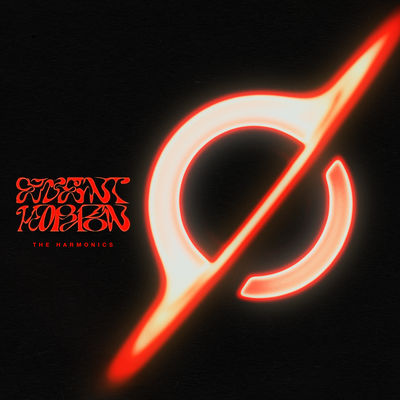
I recommend the new Stanford Harmonics album, Event Horizon. It's got a good beat and you can thrash to it.
It also has some really powerhouse solos and a knack for picking the songs these singers can make sound great. On their own, most of these tunes are unremarkable to me, radio background noise. But sung here, they hold my interest. When singers like singing something and like singing together, it elevates almost anything and creates compelling moments like the end of Nude or the opening drone of Saeed. According to the liner notes, these songs reflect the gamut of emotions from getting through the pandemic and its effects on generations of college life. The group considers this lineup a concept album and has brought together nearly thirty singers to put it together, and their passion shows.
This recording opens with two ensemble numbers that set the mood. Then Madeleine Salem gets back-to-back star turns on When Demons Come to Life and Drink to Drown, a combination that gets an extra boost for appearing together. Then Mitchell Zimmerman, a standout from the group's previous album, returns in stellar form on Welcome to the Black Parade. The song features a few too many "jin-jin-jin"s for my personal taste, but it's fun and entertaining and they sing it well.
Later on, Nicholas Rodriguez does a terrific job on Doomsday, and the group thrashes its collective way through the Nightmare medley before ending with It's Called: Freefall, my personal favorite track of them all. That closer has an acoustic feel as it switches between folkish vocals and full on wall-of-sound rock. When the drums drop out, the voices get clear, their sincere timbre contrasting with the casual swear words in the lyrics. It's earnest and compelling and a great reason to listen to this album.
It's a pleasure to get a record that really means something to the group that made it.

| Tuning / Blend | 5 |
|---|---|
| Energy / Intensity | 5 |
| Innovation / Creativity | 4 |
| Soloists | 4 |
| Sound / Production | 5 |
| Repeat Listenability | 3 |
| Tracks | ||
|---|---|---|
| 1 | Saeed | 5 |
| 2 | Kill the Sun | 4 |
| 3 | When Demons Come to Life | 5 |
| 4 | Drink to Drown | 4 |
| 5 | Welcome to the Black Parade | 5 |
| 6 | Unself Portrait | 4 |
| 7 | Nude | 4 |
| 8 | Doomsday | 4 |
| 9 | Nightmare | 4 |
| 10 | It’s Called: Freefall | 4 |
By their own admission, the more-than-five-years-in-the-making, 13th studio album from The Harmonics is a concept album born of the swirl of emotions for many that typified the period during the worst of the COVID-19 pandemic. The inherent nature of self-isolation and social distancing can be antithetical to the most enjoyable facets of the creative process and art-making, and The Harmonics cite anger, fear, sadness, loneliness, grief, and despair among the key feelings they were seeking to explore with Event Horizon.
They also cite "hope", but I daresay that apart from the existence of this album in and of itself — no small feat, mind you — you'd be hard-pressed to find much in the way of hope on this album. There's definitely ample talent on display. There's a great deal of passionate singing. There are a handful of truly terrific arrangements and several others that are also very good. There is, as one would expect, fabulous production value from the team of Ted Trembinski, Ed Boyer, and Bill Hare. But "hope" was most certainly not my takeaway from several listens to this repertoire. Indeed, had I not had some basic understanding of what The Harmonics were reacting to in crafting this release as a "concept album", I might have called my physician immediately in search of my first Xanax.
Don't misunderstand: depressing, fatalistic hopelessness isn't by any means bad music. Heck, it's the basis for tons of great music. It's just a bit relentless here, and the result is reflected in my Repeat Listenability score, as I can't imagine (or wish) that I'll ever be in a place where I need to listen to an album like this again from top to tail.
Isolating the individual elements, however, provides an opportunity to single out a few folks for distinction: that starts with Mitchell Zimmerman just absolutely obliterating (in a good way) the solo on Welcome to the Black Parade. There's a fair bit of material on this album that I didn't know terribly well; this My Chemical Romance anthem was not one of them. I'll admit to skepticism upon seeing it on the track list, but Zimmerman very quickly dashed any concerns I had and just killed it. Sawyer Niehaus and Madeleine Salem, the two soloists of When Demons Come to Life, deserve honorable mention as well for their fantastic work. Indeed, that song as a whole may be my personal fave on the album, aided immeasurably by a wonderfully kinetic, driving arrangement from a cappella veteran Jon Pilat (Harmonics '99). Also on the arranging front, Nemi Nayak shows a varied palette and a particular touch with full-throttle, guitar-driven backing vocals on Saeed and Unself Portrait, as well as in a collaboration on Kill the Sun.
On a related note, at least in this instance, the group really really really seems to like a balls-to-the-wall, shredding guitars, pounding, wailing wall-of-sound (I had moments of nostalgia, feeling like it was very Off the Beat circa 1998 but with much better technology and recording techniques). For a fair bit of this material, that's entirely apropos. But it can also be more than a little overwhelming. It's always impeccably executed, to be sure, but at times — notwithstanding that it may well be the desired effect based on the concept of the album — I longed for a little more dynamic and textural variation to break up the unflinching angst. Not just as a literal emotional break, but also as an enhancement of the text. In more than a few places — Drink to Drown and Doomsday perhaps most specifically for me — it feels like the group was chasing a sort of "irony" in delivering intense and vividly nihilistic lyrics with a certain smooth or matter-of-fact detachment that is more extreme than even the original artists opted for. I get it as a choice, but it subtracted rather than added for me.
Certainly if you love the source material covered here, I'd strongly recommend you invest some time and energy in this album. Even if you don't, it's a very impressive listen at least once. Perhaps accompanied by a drink. Or a few.

TeKay
5| Tuning / Blend | 5 |
|---|---|
| Energy / Intensity | 4 |
| Innovation / Creativity | 5 |
| Soloists | 5 |
| Sound / Production | 4 |
| Repeat Listenability | 4 |
| Tracks | ||
|---|---|---|
| 1 | Saeed | 5 |
| 2 | Kill the Sun | 4 |
| 3 | When Demons Come to Life | 5 |
| 4 | Drink to Drown | 4 |
| 5 | Welcome to the Black Parade | 4 |
| 6 | Unself Portrait | 5 |
| 7 | Nude | 5 |
| 8 | Doomsday | 5 |
| 9 | Nightmare | 5 |
| 10 | It’s Called: Freefall | 4 |
According to the group's website: "The Harmonics are proud to present Event Horizon, our thirteenth studio album, first album since Signal Lost in 2019, and first ever concept album[*]. Event Horizon marks the culmination of over half a decade of work and features performances by nearly thirty past and present Harmonics, making this our largest album ever by number of vocalists."
Six years for a group like The Harmonics is a long time without any commercial output, and the collegiate a cappella scene has felt the dearth made because of their absence. There's something about West coast electronic punk metal and subversive emo rock music that soothes the soul the way no other type of music can. I don't "hate" categorizing groups, but they fill a hole in my heart made by the lack of recording by another avant-garde group with southern flair — Gestalt from the University of Florida. (And I promise to both groups that this will be last time that I mention the other in a review.)
I added that asterisk because of the claim of Event Horizon being their first concept album. I won't necessarily argue with the group regarding how they define their work, but I think this does a slight disservice to their predecessor, namely Fault of Imagination for which I wrote:
Sometimes you have to immerse yourself in the music to truly acknowledge the nuances of the tracks and the foibles of the musicians that attempt the art of a cappella. And total immersion is advised, no required, to begin to appreciate the concept behind the Stanford Harmonics' album Fault of Imagination. And while I can't even begin to attempt to say that I understand it, the act of experiencing it has been a real testament of faith and exploration — a fault of imagination indeed.
If anything, I'd say that the current literal generation of The Harmonics only knows how to produce concept albums. Before all else, they are musicians and artists who are trying to craft a complete story with a beginning, middle and end, or akin to a well-made play, or Plato's Poetics. So here we are at their 13th album (also my favorite number, so the stars are aligning with this one) telling a story of hope culled from the isolation and despair caused by the COVID-19 pandemic in the most damning and twisted way that only The Harmonics could pull off with such gloriousness. Ennui is a bitch, ain't it? But from it can come such life — and apparently such constructively creative and life-affirming music.
This is the purposeful life you are experiencing listening to this album, that they experienced performing and creating it, I'm sure. Though, to be sure, a listener has to appreciate or enjoy this type of music (if you are averse to curse words, stay clear; even though the tracks aren't marked on my copy, there are lots of f-bombs) in order to really think it is beyond merely good. It's not going to win over any a cappella generalists or those who still consider Pentatonix cutting-edge. When Radiohead and My Chemical Romance are the most mainstream artists listed on an album, you'd better be open to some niche experiences. It's ambitious, occasionally uneven, but ultimately a compelling listen.
The overarching theme is cosmic collapse and human fragility — fitting for a project called Event Horizon. The emotional impact of such is strongest when the group comes from a place of theatricality and sincerity: both Welcome to the Black Parade and When Demons Come to Life feel like the build up to release, like the need and realization of the communal catharsis we're still in the midst of experiencing.
Speaking of demons, Sawyer Niehaus and Madeleine Salem are the epitome of this grounded theatricality and help make When Demons Come to Life one of the best tracks on the album. Alumnus Jon Pilat (class of '99) arranged this Halocene song to within an inch of its life, even adding a touch of Broadway jazz in one lyrical passage that immediately caught my attention. Alternatively, the only track that I think sticks out in a bad way are the vocables for Kaile Maske's arrangement of Welcome to the Black Parade; it's giving lots of "jin jin joh" nostalgia which just sounds really strange to the current ear. I would have expected it from Pilat considering that sound was the heyday of his most recent post-collegiate career, and not such a gifted Gen-Z arranger as Maske. Others may not be as befuddled, but it took me out of the overall enjoyment of the song.
Speaking of Pilat, though, Nude is my favorite ballad on the album. I am entranced every time I listen to the song, some of which is the absolutely dazzling performance by Emma Li where she pulls each note out of her soul inch by inch. You feel the tension she's creating that just evokes every element of the song so perfectly. But also Pilat's construction of the song. It's easy to lose yourself in the majesty of it all. I also have to give a quick shout out to Nicholas Rodriguez for his turn on the Lizzy McAlpine song Doomsday. Talk about using one's voice to create an extra layer of meaning to a track, and what a fantastic job Rodriguez does with his instrument.
Much like both Fault of Imagination and Signal Lost, the more I listen to Event Horizon, the more and more enamored I become. Hopefully, you'll have the same reaction.


